
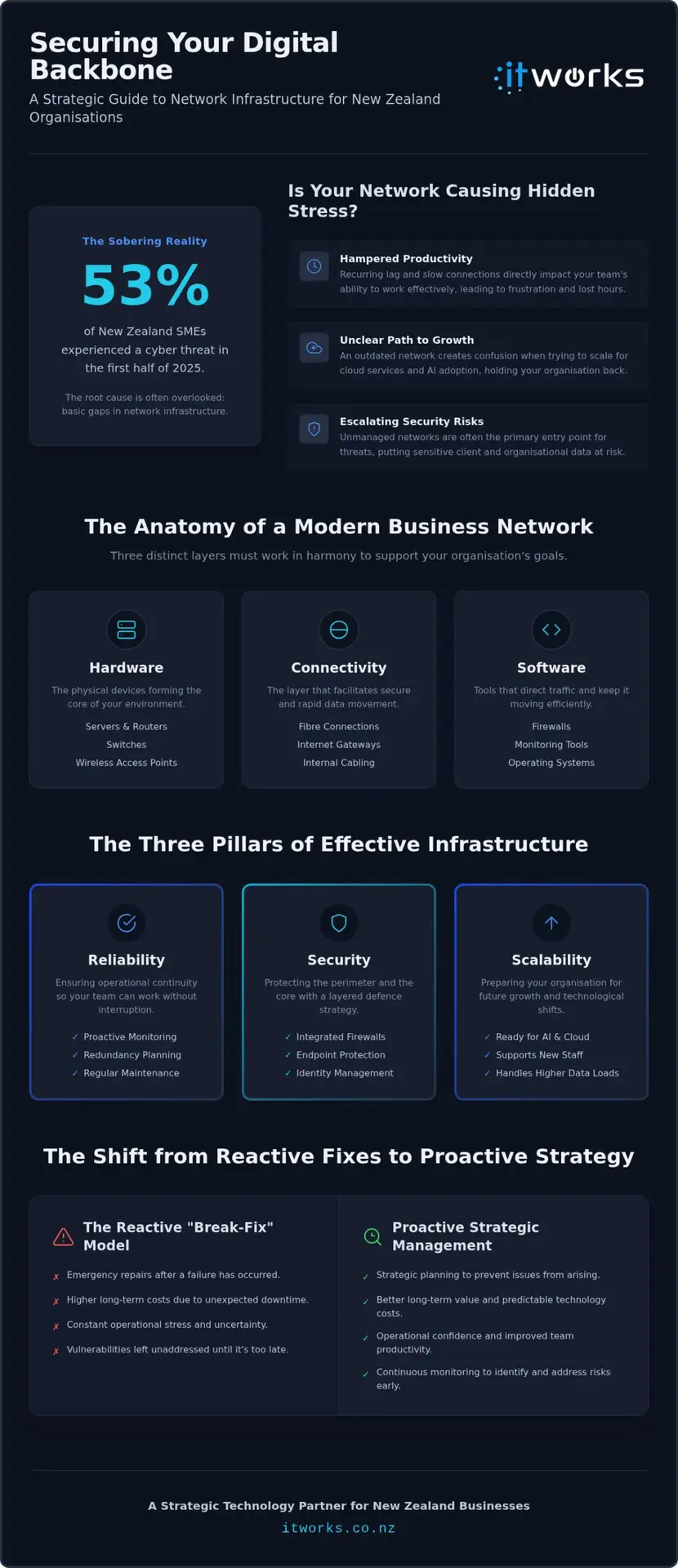
Over 53% of New Zealand SMEs experienced a cyber threat in the first half of 2025, often discovering that basic infrastructure gaps were the quiet culprits behind the disruption. While these figures are significant, they underscore the importance of implementing robust network security solutions NZ organisations can rely on to protect their operations. Your network is no longer just a collection of cables and routers; it’s the foundation of your entire business, and when it falters, the resulting stress can derail even the most ambitious growth plans.
You likely recognise the frustration of staff productivity being hampered by recurring lag or the confusion of trying to scale for cloud and AI adoption without a clear path forward. You deserve a network that remains invisible because it’s consistently reliable, giving you total confidence that your client and donor data is secure. This guide will show you how proactive management secures your digital backbone, ensuring your organisation stays resilient and productive. We’ll outline how to move beyond reactive fixes toward a strategic technology roadmap that prepares your business for whatever comes next.
Key Takeaways
- Understand why your network is the digital backbone of your organisation and how proactive management ensures it supports your daily operations without interruption.
- Identify the three pillars of effective infrastructure, which are reliability, security, and scalability, to create a system that works silently in the background.
- Discover how robust network security solutions NZ organisations use can protect sensitive data and reduce the financial risks associated with cyber incidents.
- Learn the hidden costs of the reactive break-fix model and why a strategic partnership offers better long-term value than emergency repairs.
- Prepare your organisation for future growth by building a high-speed network foundation that’s ready for AI adoption and cloud integration.
What is Network Infrastructure Management for NZ Organisations?
Think of your network as the unseen nervous system of your business. It isn’t just about the routers in the cupboard or the cables under the floor; it’s the digital backbone that connects your people to their work. While many focus on the physical setup, true management is about ensuring the secure, uninterrupted flow of information across your organisation. It’s the difference between having a collection of parts and having a reliable system that empowers your team, a philosophy shared by professional technology systems providers like UTD Technology Corp.
In a practical sense, network infrastructure management is the proactive coordination of all systems that allow your team to communicate and collaborate securely. By looking at the big picture, you move away from treating IT as a series of isolated parts and start seeing it as a unified engine for growth. This strategic approach ensures that every byte of data reaches its destination safely and quickly.
The Components of a Modern Business Network
A functional network is built on three distinct layers that must work in harmony to support your business goals:
- Hardware: This includes the physical devices like servers, routers, switches, and wireless access points that form the core of your office environment.
- Connectivity: This layer facilitates data movement through fibre connections, internet gateways, and internal cabling, ensuring your team stays linked to the world.
- Software: Modern Network management relies heavily on software, including firewalls, monitoring tools, and operating systems that direct traffic and keep it moving efficiently.
Why Management Matters More Than the Initial Build
Infrastructure isn’t a set and forget asset. As your organisation grows, your network must adapt to support new staff, higher data volumes, and more complex applications. A network that was perfectly designed three years ago might struggle to support the high-speed demands of modern AI tools or cloud-based platforms today. Constant evolution is the only way to stay ahead of these requirements.
There’s a direct link between the health of your network and daily staff productivity. When the connection drops or slows down, work stops. Beyond simple uptime, unmanaged networks often become the primary entry point for modern security threats. This is why investing in network security solutions NZ professionals recommend is about more than just protection; it’s about maintaining a stable environment where your team can thrive. Without active oversight, small vulnerabilities can quickly escalate into significant operational risks that could have been avoided with a proactive strategy. Choosing the right network security solutions NZ provides ensures your business remains resilient against these shifting challenges.
The Three Pillars of Effective Infrastructure Management
To achieve a state of calm reliability, your network management should rest on three core pillars: Reliability, Security, and Scalability. When these elements are balanced, your team can focus on their core mission without ever needing to think about the technology supporting them. These pillars don’t exist in isolation. They are deeply integrated with your broader backup and disaster recovery NZ plans to ensure your organisation remains resilient regardless of external disruptions.
Reliability: Ensuring Operational Continuity
Reliability is the foundation of a productive workplace. It’s achieved through proactive monitoring that identifies potential bottlenecks or hardware failures before they result in actual downtime. For example, redundancy planning ensures that if your primary fibre connection fails, a secondary link is ready to take over immediately. This might involve a mix of UFB and mobile data backups to keep the office running. Regular maintenance also plays a vital role, extending the lifecycle of your hardware and ensuring your investment continues to deliver value over the long term. A reliable network means your staff aren’t fighting with the tools they need to do their jobs. Pairing this reliability with robust business continuity solutions NZ organisations can depend on ensures your operations keep running even when the unexpected occurs.
Security: Protecting the Perimeter and the Core
Security isn’t just a feature; it’s a fundamental requirement for every organisation. Effective network security solutions NZ professionals implement use a layered defence strategy, integrating firewalls, endpoint protection, and identity management. This approach ensures that your network serves as the solid foundation for your wider cyber security for small business NZ strategy. By adopting proven secure network architecture strategies, you can manage vulnerabilities as they emerge without resorting to fear-based tactics. Investing in the right network security solutions NZ businesses need allows you to stay ahead of risks while maintaining a seamless user experience.
Scalability: Planning for Growth and New Tech
A well-managed network must be ready for tomorrow. Scalability ensures your infrastructure can handle an increasing headcount without performance degradation or frustrating lag for existing users. It also prepares your organisation for high-bandwidth activities like seamless video conferencing and large-scale cloud data transfers. This forward-thinking approach aligns your infrastructure with the long-term goals outlined in your technology roadmap, ensuring you’re ready to adopt new developments like AI or enhanced automation. If you’re looking to strengthen these pillars, you can discuss your technology priorities with our team to ensure your digital foundation is solid for the years ahead.
Proactive Management vs. Reactive Break-Fix
A common question we hear from business leaders is why they should pay for management when everything seems to be working fine. It’s a fair point on the surface, but it treats technology like a lightbulb that either works or doesn’t. In reality, your network is more like a high-performance vehicle. Waiting for the engine to seize before visiting a mechanic results in massive repair bills and weeks of lost time. The break-fix model relies on failure to trigger action, creating a cycle of stress and unpredictable expenses.
Contrast this with proactive management. By paying a predictable, flat fee, you ensure that experts are constantly watching over your systems. This approach replaces the frantic energy of emergency repairs with a sense of calm reliability. You gain the peace of mind that comes from knowing potential issues are being handled before they ever reach your team’s desks. It moves your IT from a source of frustration to a stable foundation for growth.
The Real Cost of Downtime for NZ Organisations
When your network goes offline, the clock starts ticking on more than just a repair bill. You have to account for the lost wages of staff who can’t access their tools, alongside the missed opportunities from unanswered enquiries. For any local organisation, even a few hours of silence can damage a hard-earned reputation. Clients and donors expect immediate responses; being unreachable suggests a lack of professional oversight. Reactive support is often more expensive over a 12-month period than proactive management, especially when you factor in the cumulative impact of these hidden costs. A well-structured approach to business continuity solutions NZ businesses rely on can help you quantify and mitigate these risks before they escalate.
How Proactive Monitoring Actually Works
True proactive management involves 24/7 system oversight that flags subtle warning signs. These tools detect things like rising hardware temperatures or early disk drive failures, allowing components to be swapped before they cause a crash. This level of care is a core part of the network security solutions NZ businesses need to stay resilient. It includes automated patch management, which closes security gaps in your software as soon as they’re discovered, preventing intruders from finding an easy way in.
Regular reporting provides your executive team with clear visibility of technology risks and performance. Instead of wondering if your systems are secure, you’ll have the data to prove it. This structured approach ensures that the network security solutions NZ organisations implement are working as intended, keeping your digital backbone strong without the need for constant, manual intervention. It’s about being prepared, not just being fast when things go wrong.
Preparing Your Infrastructure for AI and the Cloud
AI and cloud tools have moved from being innovative extras to essential components of a modern workspace. For these tools to deliver on their promise of efficiency, they require a robust, high-speed foundation. Recent data indicates that 74% of New Zealand leaders worry their organisation lacks a plan to implement AI, making readiness a primary strategic goal for 2026. This shift isn’t about following trends; it’s about ensuring your team has the infrastructure needed to remain competitive. By integrating the right network security solutions NZ providers offer, you can ensure your digital backbone is strong enough to support these advanced workloads without compromising on speed or safety.
Bandwidth and Latency in the AI Era
Modern tools like Microsoft Copilot or real-time cloud collaboration platforms need a stable, fast connection to be truly effective. High latency or frequent drops don’t just cause minor delays; they can render AI assistants unresponsive and frustrate your team. Optimising your configuration for a cloud-first environment involves more than just increasing your fibre speed. It requires a strategic look at how data moves through your office. You must manage internal traffic to ensure that while your team explores new tools, your essential business systems don’t get bogged down. This level of oversight turns a potentially chaotic transition into a smooth, manageable progression that preserves staff productivity.
Responsible Governance and Data Security
Adopting new technology requires a disciplined approach to governance, especially since 81% of New Zealand AI users are currently bringing their own unsanctioned tools to work. You must ensure that AI tools only access the specific data they are authorised to use, preventing sensitive information from being surfaced inappropriately. This is particularly relevant given the Privacy Amendment Act 2025, which introduces new notification requirements for organisations from May 2026. Choosing the right network security solutions NZ professionals recommend helps you maintain data sovereignty and privacy, ensuring your organisation remains compliant with local regulations. A clean, organised network structure is the prerequisite for safe AI adoption. It allows you to track where data resides and who can access it, building organisational confidence. To understand the broader context of these developments, you can explore the AI automation solutions New Zealand leaders are using to drive productivity.
Choosing a Strategic Partner for Your Network
Selecting a technology provider is about more than just finding someone to answer the phone when things go wrong. It’s about finding a long-term partner who understands the specific challenges of the New Zealand market. A local, NZ-based team doesn’t just offer technical skills; they provide a shared identity and a deep understanding of our national business landscape. This partnership allows you to move away from the stress of managing multiple vendors and toward a collaborative relationship focused on building organisational confidence and resilience.
Beyond the Helpdesk: The Value of Strategic Advice
True value comes from strategic advice that looks beyond the next support ticket. An IT roadmap is essential for aligning your technology spend with your actual business goals, ensuring every dollar invested supports your mission. This forward-thinking approach helps with long-term hardware procurement and budgeting, preventing the sudden, large expenses that often plague unmanaged networks. When you have a clear roadmap, you can plan for growth with certainty, knowing your infrastructure will scale alongside your team. By integrating these strategies with the network security solutions NZ organisations can trust, you move from simple tech support to genuine business enablement. It’s about ensuring your technology is an asset that drives productivity rather than a cost centre that demands constant attention.
Building Resilience with IT Works
At IT Works, we take an outcome-focused approach to infrastructure, security, and productivity. We believe that technology should enable your success, not hinder it. This is why we prioritise practical, plain-language solutions over technical jargon, ensuring your executive team always understands the value being delivered. Our managed it support services provide a strategic advantage by focusing on long-term stability and resilience. We act as a strategic ally, invested in your journey and focused on results that are functional and sustainable in the real world.
Building a secure and reliable network is a continuous journey, not a one-off project. We focus on risk reduction and organisational confidence, providing the network security solutions NZ businesses need to stay resilient. Talk to IT Works about your technology strategy and how we can support your growth. Discuss your cybersecurity priorities with our team to ensure your digital backbone is ready for the future. By focusing on the human side of technical challenges, we help you create a technology environment that just works, allowing you to focus on what you do best.
Building a Resilient Foundation for Future Growth
Your organisation’s network is far more than a technical requirement; it’s the invisible engine that drives your productivity and secures your future. By moving away from the stress of reactive repairs toward a proactive strategy, you ensure your digital backbone remains resilient and ready for the next wave of innovation. We’ve explored how the three pillars of reliability, security, and scalability create a stable environment where your team can thrive without technical interruptions.
Implementing effective network security solutions NZ businesses can depend on is the first step toward building true organisational confidence. As an NZ-based team with over 20 years of experience, IT Works focuses on strategic partnerships that prioritise your business outcomes over technical jargon. We provide a calm, steady hand to guide your technology roadmap, ensuring you’re prepared for AI adoption and cloud integration with a non-fear-based approach to cybersecurity.
Investing in your infrastructure today creates the stability you need to lead your organisation with certainty tomorrow.
Frequently Asked Questions
What is the difference between a router and a managed switch?
A router connects your entire network to the internet, while a managed switch connects individual devices within your office to each other. Think of the router as your front door and the switch as the internal corridors. Managed switches give you the power to control and prioritise traffic, which is essential for ensuring your video calls don’t lag when someone else is downloading a large file. This internal control is vital for a stable workplace.
How much bandwidth does a typical NZ office of 20 people actually need?
An office of 20 people usually requires a 200/200 Mbps or 500/500 Mbps symmetrical fibre connection to handle modern workloads comfortably. If your team frequently uses cloud-based AI tools or high-definition video conferencing, the higher tier is a safer choice. It isn’t just about the raw speed; it’s about having enough capacity so that multiple staff members can perform data-heavy tasks simultaneously without the connection becoming a bottleneck for the rest of the team.
Can network infrastructure management help reduce our monthly IT costs?
Yes, proactive management reduces costs by preventing the expensive emergency fees associated with the reactive break-fix model. By identifying potential hardware failures before they happen and automating software updates, you avoid the significant productivity losses that occur during unscheduled downtime. A flat-fee partnership makes your technology budget predictable. It replaces the stressful pattern of unexpected repair bills with a steady, manageable operational cost that aligns with your organisation’s long-term growth plans.
Do we need to replace all our hardware to get professional management?
You don’t necessarily need to replace all your existing hardware to begin a managed partnership. We start by auditing your current environment to see what is functional and what presents a security risk. If your routers or switches are still supported by the manufacturer and meet performance standards, we can often integrate them into a managed plan. Our goal is to create a technology roadmap that replaces aging assets gradually and strategically rather than all at once.
How does network management improve our cybersecurity posture?
Management improves your posture by ensuring the network security solutions NZ organisations rely on are always active and correctly configured. This includes managing firewalls, monitoring for unusual traffic patterns, and enforcing strict access controls across the office. By closing unpatched vulnerabilities and segmenting guest Wi-Fi from your core data, we significantly reduce your attack surface. It moves your security from a passive barrier to an active, monitored defence system that builds organisational confidence.
What happens to our network if our internet provider has an outage?
If your primary provider has an outage, a managed network with redundancy will automatically switch to a backup connection. This typically involves a secondary fibre line or a high-speed 4G/5G mobile data link. Your team might notice a slight change in speed, but their work won’t stop and your systems will stay online. This level of resilience is a hallmark of professional management, ensuring your digital backbone remains connected even when external providers fail.
Is it better to have on-site servers or move everything to the cloud in 2026?
In 2026, most NZ organisations benefit from a cloud-first approach, though some still require hybrid setups for specific local applications. Moving to the cloud offers better scalability and makes remote work seamless for your team. However, the decision depends on your specific data residency needs and the speed of your local connection. We help you evaluate your technology priorities to decide which environment provides the best balance of performance, security, and cost for your specific mission.
How often should our network infrastructure be audited for risks?
Your network infrastructure should be audited for risks at least once a year, or whenever significant changes occur in your business. Regular audits ensure that your network security solutions NZ configurations remain effective against evolving threats. These reviews check for unauthorised devices, outdated firmware, and changes in staff access requirements. It’s a vital part of maintaining a clear technology roadmap and ensuring your infrastructure continues to support your productivity and long-term business goals.