
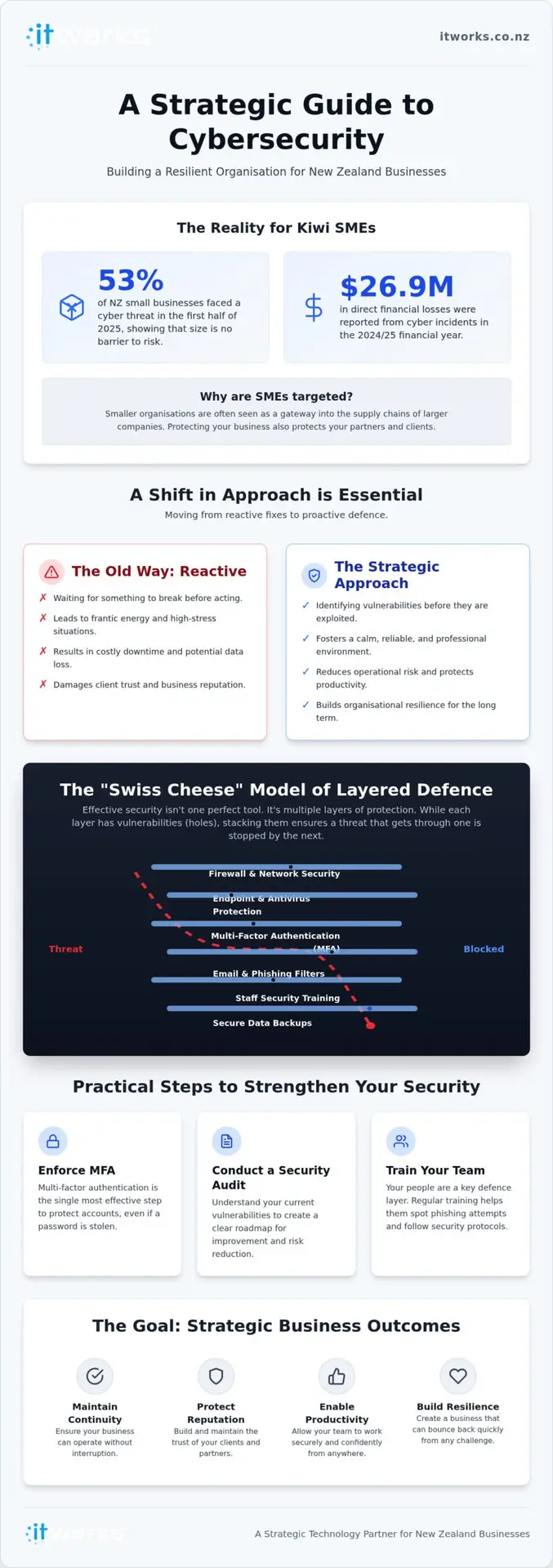
With 53% of New Zealand small businesses experiencing a cyber threat in the first half of 2025, it’s clear that the conversation around digital safety needs to change. You might feel that protecting your organisation is a daunting task, often buried under layers of technical jargon and the anxiety of becoming the next ransomware headline. It’s common to worry that enterprise-grade protection is out of reach for your budget, or that one wrong click could jeopardise everything you’ve built.
However, effective cyber security for small business NZ doesn’t have to be a source of constant stress. We’re here to show you how a strategic approach can replace that uncertainty with a sense of calm reliability. You’ll learn how to safeguard your client data and build a resilient organisation that’s ready for the future. This article provides a clear, jargon-free roadmap for security, focusing on practical steps that reduce your operational risk and ensure you’re meeting the latest requirements of the Privacy Act 2020.
Key Takeaways
- Understand that cyber security is a strategic business function focused on maintaining continuity and protecting your reputation, rather than just a technical IT task.
- Learn why a “Swiss Cheese” model of layered protection is essential to catch threats that single tools often miss.
- Discover how to balance your budget by investing in proactive cyber security for small business NZ, comparing the manageable cost of protection against the significant financial and reputational impact of a breach.
- Identify immediate, practical actions you can take, such as conducting a security audit and enforcing multi-factor authentication across all critical applications.
- Recognise the value of a long-term technology partnership that moves beyond reactive support to provide ongoing strategic guidance and resilience.
What Does Cyber Security for Small Business NZ Actually Mean?
Cyber security is often viewed as a technical barrier, but for a local firm, it’s actually a core business strategy. While a comprehensive overview of cybersecurity covers the technical layers of hardware and software protection, the practical reality is simpler. For most organisations, cyber security for small business NZ is about ensuring your team can continue to operate and protect your reputation regardless of digital challenges. It’s the practice of safeguarding your systems, networks, and data from unauthorised access or digital attacks.
We believe in shifting the focus from simply “preventing hackers” to building a resilient organisation. Resilience means that even if a challenge arises, your business has the structure to bounce back quickly without losing client trust. When handled correctly, security becomes an enabler. It allows your staff to work securely from a home office in Christchurch or a client site in Auckland, knowing that the tools they use are protected. It replaces technical anxiety with a sense of calm, professional reliability.
Why New Zealand SMEs are Specific Targets
Many Kiwi business owners believe they’re “too small” to be noticed by cybercriminals. This is a common misconception that can lead to unnecessary risk. Smaller organisations are frequently targeted because they act as a gateway into the supply chains of much larger companies. By compromising a small supplier, attackers can often bypass the more robust defences of a major corporation. You aren’t just protecting your own data; you’re protecting the entire network of partners you work with.
The financial impact of being “under the radar” is significant. In the 2024/25 financial year, the NCSC recorded NZ$26.9 million in direct financial losses from reported cyber incidents. These figures highlight that cyber security for small business NZ is a critical investment in your company’s longevity. Being a target isn’t about your headcount; it’s about the value of the data you hold and the connections you maintain.
The Shift from Reactive to Proactive Security
Relying on a “break-fix” model is no longer a viable way to manage risk. Waiting for something to go wrong before acting is like waiting for a fire to start before checking your alarms. We prefer the “fence at the top of the cliff” approach. Proactive monitoring identifies vulnerabilities before they are exploited, which significantly reduces operational risk and prevents the frantic energy of reactive support.
A proactive stance does more than just protect your servers. It directly improves staff productivity and reduces stress. When your team knows the systems are monitored and secure, they don’t have to worry about the validity of every email or the safety of their login credentials. This creates a more composed workplace culture where technology supports success rather than creating a constant source of worry.
The Strategy of Layered Defence: Beyond Simple Antivirus
Effective security is rarely about finding one “perfect” tool. Instead, it relies on a concept often called the Swiss Cheese model. Imagine several slices of Swiss cheese stacked together. Each slice represents a different security measure, such as a firewall, a password policy, or an antivirus programme. While every individual slice has holes, or vulnerabilities, stacking them ensures those holes don’t align. This layered approach is the foundation of robust cyber security for small business NZ, as it ensures that if a threat slips through one layer, it’s stopped by the next.
The ultimate goal is to reduce your “attack surface”. This means making your organisation a more difficult and less attractive target by closing as many entry points as possible. It’s a shift in thinking from buying software to developing a strategic posture. This strategy involves your people and your processes just as much as your technology. When your team understands their role in this system, your business becomes significantly more resilient.
Identity and Access Management
Your digital identity is the new perimeter. Enforcing multi-factor authentication (MFA) is the single most effective step you can take to protect your organisation. It acts as a vital second check, ensuring that even if a password is stolen, the account remains secure. This is particularly important as attackers increasingly use “MFA fatigue” tactics, spamming users with requests until one is accidentally approved. Combining MFA with a solid password management policy eliminates the risks associated with shared credentials or weak, reused passwords.
We also recommend implementing the Principle of Least Privilege. This means staff members are only given the specific access they need to perform their roles. By limiting permissions, you contain the potential impact if an individual account is ever compromised. It’s a practical way to manage internal risk without hindering daily productivity.
Endpoint Protection and Email Security
Email remains the primary entry point for digital threats in New Zealand. Phishing and invoice fraud are common because they target human psychology rather than just software gaps. To counter this, you need more than basic antivirus. Managed Endpoint Detection and Response (EDR) is the modern standard. Unlike traditional tools that only look for known “bad” files, EDR monitors behaviour to spot unusual activity, such as a laptop suddenly trying to encrypt files or access restricted servers.
Automated software patching is another critical layer. Many breaches occur because of known vulnerabilities in common applications that simply weren’t updated. By automating this process, you ensure your “fence” is always in good repair without requiring manual effort from your team. Building this strategic posture is a collaborative effort. You can discuss your cybersecurity priorities with our team to see how these layers fit your specific operations.
The Value of Investment: Balancing Risk and Budget
Investing in technology often feels like a choice between growth and protection. However, viewing cyber security for small business NZ as a competing expense to your operational goals is a mistake. Professional security is a foundational investment that ensures your growth isn’t suddenly halted by an avoidable disruption. When you balance your budget, it’s helpful to weigh the monthly cost of a managed service against the potentially devastating impact of a single major breach.
The true cost of a security incident goes far beyond any initial financial loss. There are significant “hidden” expenses that many organisations overlook until they’re in the middle of a crisis. These include the cost of forensic cleaning to remove threats from your network, the total loss of staff productivity during downtime, and the long-term damage to your professional reputation. By allocating a consistent percentage of your overall IT spend to security, you replace these unpredictable, high-stress costs with a manageable and strategic operational expense.
Security as a Competitive Advantage
Demonstrating a commitment to data privacy is no longer just about compliance; it’s a powerful way to win more business. Larger organisations and government departments are increasingly scrutinising the security posture of their suppliers. Showing that you have a resilient framework in place can be the deciding factor that helps you secure a major contract. It signals to your partners that you are a reliable, sophisticated organisation that takes their data seriously.
This commitment also ensures you stay on the right side of the law. The Privacy Act 2020 continues to evolve, with the May 2026 update introducing Principle 3A, which requires organisations to be transparent when collecting personal information indirectly. Maintaining high security standards makes it much easier to meet these legal obligations and build lasting trust with your clients and donors. Many insurers also offer reduced premiums to firms that can prove they’ve implemented essential measures like multi-factor authentication and managed endpoint protection.
Managed Security vs. In-House Management
For many Kiwi businesses, the challenge of managing security internally is the sheer difficulty of finding and retaining specialised talent. The demand for security experts in New Zealand is high, making it expensive and time-consuming to maintain an in-house team that can stay ahead of modern threats. A managed service provides you with immediate access to a team of experts without the overhead of additional staff.
A significant benefit of this partnership is the ability to provide 24/7 monitoring. A single internal staff member cannot watch your systems around the clock, yet digital threats don’t stick to a standard nine-to-five schedule. Managed services offer a steady, reassuring presence that monitors your network while you sleep, providing predictable monthly costs that make budgeting simple and effective. This approach allows your leadership team to focus on strategic goals, confident that your digital environment is being guided by experts.
Practical Steps to Strengthen Your Security Posture
Building resilience starts with knowing exactly where you stand. A comprehensive security audit is the first logical step, allowing you to identify specific gaps in your current setup before they become issues. This moves you away from guesswork and towards a structured plan for cyber security for small business NZ. Once you have a clear picture, you can prioritise high-impact actions like implementing multi-factor authentication (MFA) across every critical business application.
A strategic approach also involves creating a technology roadmap. Rather than trying to fix everything at once, a roadmap helps you distribute the cost and effort of security improvements over time. This ensures your security posture grows alongside your organisation, providing a sustainable path toward long-term resilience and professional stability.
Training Your Best Defence: Your People
Technology is only part of the equation. Security is ultimately a culture, not just a task for an IT department. When your team understands their role in protecting the organisation, they become your most effective defence. Regular awareness training helps staff spot sophisticated phishing attempts by focusing on common red flags rather than technical details. This approach builds confidence across your team, replacing anxiety with a sense of shared responsibility.
The goal is to foster an environment where staff feel safe to admit mistakes. If an employee accidentally clicks a suspicious link, the speed of their report is critical to your response. A clear incident reporting process ensures that these moments are handled with professional composure rather than blame. This psychological safety allows your partner to contain a threat before it spreads, protecting your reputation and your data.
Backup and Disaster Recovery Essentials
A backup is only truly valuable if you can restore from it quickly and reliably. Many organisations assume they’re protected until they try to recover data and find the files are corrupted or incomplete. We recommend following the ‘3-2-1’ rule for cyber security for small business NZ: maintain three copies of your data, stored on two different formats, with at least one copy kept off-site.
Regular testing of your recovery process is essential. It’s the difference between a minor interruption and a major operational crisis. For a deeper look at how to protect your critical data, you can read our Backup and Disaster Recovery NZ guide. This practical focus ensures that even if the worst happens, your business remains stable, confident, and ready to continue serving your clients.
Partnering for Long-Term Cyber Resilience
Cyber security isn’t a one-off project you can simply “set and forget”. It’s an ongoing journey that requires regular attention as your organisation grows and the digital environment evolves. Thinking of security as a destination often leads to a false sense of safety. Instead, viewing it as a continuous process of refinement ensures that your defences remain robust and aligned with your business goals. A strategic technology partner plays a crucial role here, moving beyond basic support to provide the guidance needed to stay ahead of potential risks.
The ultimate goal is to provide you with the confidence to focus on your core mission. When you know your systems are monitored and your data is protected, you can pursue growth opportunities with a clear mind. Effective cyber security for small business NZ integrates seamlessly into your daily operations, acting as a silent enabler of success rather than a technical hurdle. It’s about building a foundation of resilience that supports your long-term vision and professional stability.
The IT Works Approach to Security
We believe in providing practical, non-fear-based advice that is tailored to the specific needs of your organisation. Our approach avoids the “doom and gloom” often found in the industry, focusing instead on risk reduction and organisational confidence. We blend strategic roadmapping with operational 24/7 monitoring, ensuring that your long-term goals are supported by stable, day-to-day management. This methodical rhythm builds trust, as our services reflect a deeply organised and connected approach to your technology.
Our NZ-based team provides a level of local trust and accountability that distant service providers cannot match. Based in Wellington, we understand the specific context of the New Zealand business environment and the regulatory requirements of the Privacy Act. This local presence means we’re invested in your success as a partner, acting as a strategic ally rather than just a vendor. We integrate security into every facet of our managed IT services, ensuring it is a core part of your technology ecosystem from the ground up.
Next Steps for Your Organisation
Moving from a reactive posture to a resilient one doesn’t have to happen overnight. It’s a process that can be managed in easy, sustainable stages. The first step is often the most important: beginning a conversation about your current technology strategy and where you want to be in the future. This allows us to identify your priorities and develop a plan that fits your budget and operational needs without the frantic energy of traditional support.
By taking a structured approach, you can systematically close gaps and build a more secure environment without overwhelming your team. We’re here to lead you through this process, providing the expertise and steady guidance needed to navigate technical challenges with ease. Your journey toward greater resilience and cyber security for small business NZ starts with a simple, low-pressure discussion about your priorities.
Building a Resilient Future for Your Organisation
Viewing security as a strategic asset rather than a technical burden allows you to lead with confidence. By adopting a layered defence and focusing on practical, proactive measures, you protect your reputation and ensure your team can work safely from anywhere. We’ve explored how small changes, like implementing MFA and regular staff training, create a significant impact on your overall risk profile.
Strengthening cyber security for small business NZ is a continuous journey that benefits from expert guidance. Our NZ-based team focuses on providing a non-fear-based approach, using strategic technology roadmaps to help you reach your goals in manageable stages. This partnership ensures your technology remains an enabler for success, giving you the freedom to focus on what matters most: growing your business.
You have the power to move from reactive support to a state of calm, reliable resilience. We’re here to help you navigate this path with clarity and professional composure.
Commonly Asked Questions
Is cyber security for small business NZ really necessary if we don’t have sensitive data?
Yes, every organisation holds information that is valuable to criminals, such as bank details, employee records, or simply access to your email accounts. Even if you don’t store “sensitive” client files, a breach can halt your operations entirely. Effective cyber security for small business NZ is about protecting your ability to function and ensuring your reputation remains intact regardless of digital challenges.
How much should a New Zealand small business spend on cyber security?
Rather than a fixed dollar amount, it’s more effective to view security as a percentage of your total technology budget. Most organisations find that allocating between 10% and 15% of their IT spend toward security provides a robust level of protection. This investment covers essential layers like multi-factor authentication and proactive monitoring, which are far more cost-effective than the high price of recovering from a major breach.
What is the most common cyber threat for Kiwi businesses in 2026?
Phishing remains the most prevalent threat, though it has become significantly more sophisticated with the use of generative AI. Attackers now create highly convincing emails that are tailored to the local New Zealand context, making them difficult for staff to spot. These attempts often lead to business email compromise, where criminals intercept payments or sensitive communications, resulting in direct financial loss for many local firms.
Does our business need a dedicated cyber security officer?
Most small to medium organisations don’t require a full-time, in-house security executive. Instead, they benefit from a partnership with a managed service provider that offers strategic oversight and expert guidance. This model gives you access to a team of specialists for a fraction of the cost of a single salary. It provides the high-level roadmap you need while allowing your leadership team to focus on growth.
Will implementing better security make it harder for my staff to do their jobs?
Well-designed security measures should actually make work smoother by reducing the risk of technical disruptions and downtime. While steps like multi-factor authentication add a small extra check, modern security tools are built to be user-friendly and non-intrusive. The goal is to create a culture of safety that empowers your staff to work confidently from any location, whether they are in Wellington or working remotely.
What should I do if I think my business has been hacked?
If you suspect a breach, you should immediately disconnect affected devices from the network and contact your technology partner. Avoid attempting to “fix” the problem yourself, as this can accidentally destroy forensic evidence needed to understand the scope of the attack. You should also report the incident to CERT NZ and check your obligations under the Privacy Act 2020 if any personal information has been compromised.
How often should we update our cyber security policies and tools?
You should review your formal security policies at least once a year or whenever your business undergoes a significant change. However, your technical tools and monitoring systems should be updated continuously through automated patching. This ensures your cyber security for small business NZ remains effective against new vulnerabilities without requiring constant manual intervention, maintaining a steady and reassuring defence for your organisation.
Can cyber insurance replace the need for managed security services?
Cyber insurance is a vital safety net, but it is not a substitute for active protection. Insurance helps you manage the financial fallout after an incident, whereas managed services work to prevent the incident from occurring in the first place. Most insurers now require proof of robust security measures, such as verified backups and MFA, before they will provide coverage or pay out on a claim.