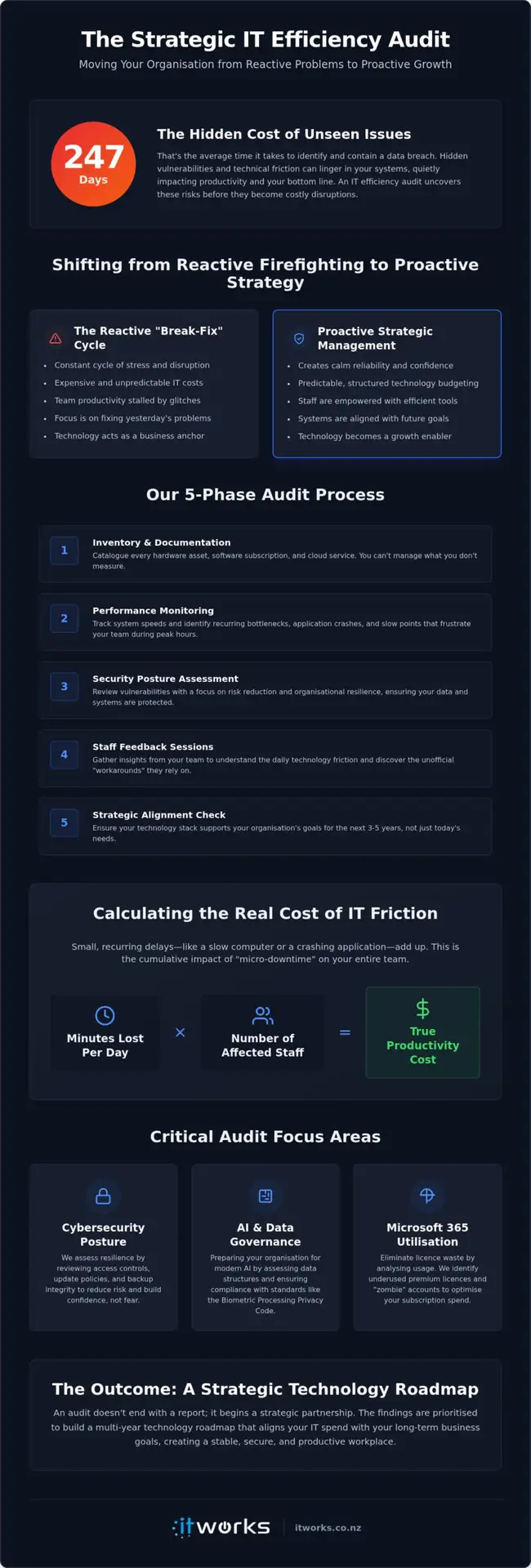
Did you know that the average time to identify and contain a data breach has reached 247 days? For many New Zealand business leaders, this statistic is a sobering reminder that hidden vulnerabilities can linger far longer than expected, quietly impacting your bottom line. It is frustrating when your team deals with recurring technical glitches, or when your IT spend feels like a mounting cost without a clear strategic return. You likely believe that your technology should be a reliable foundation for growth, yet it often feels like you are managing a series of reactive problems instead of moving forward with confidence.
Performing a comprehensive it efficiency audit nz is the most effective way to move from reactive support to strategic clarity. This article will show you how to identify technical bottlenecks, calculate the real impact of lost productivity, and build a structured roadmap for your technology environment. We will explore how to assess your current security risks and prepare for the latest AI governance standards, such as the Biometric Processing Privacy Code. By following this guide, you will gain a data-backed understanding of your systems. This allows you to align your technology spend with your organisation’s long-term goals and create a more resilient, productive workplace.
Key Takeaways
- Understand how a comprehensive IT efficiency audit NZ prioritises staff productivity and operational flow over basic technical checklists.
- Discover how to inventory your hardware and software assets while monitoring performance to pinpoint recurring bottlenecks.
- Calculate the real cost of IT friction by using a simple formula to measure the cumulative impact of micro-downtime on your team.
- Assess your cybersecurity posture and Microsoft 365 usage to eliminate licence waste and ensure your systems are ready for AI governance.
- Learn how to prioritise audit findings to build a multi-year technology roadmap that aligns your IT spend with long-term business goals.
Understanding the IT Efficiency Audit: Beyond the Technical Checklist
An IT efficiency audit is far more than a simple inventory of your office laptops. It is a comprehensive review of your technology, security protocols, and digital systems designed to ensure every component serves your business goals. While many associate the term “audit” with energy consumption or financial records, this process focuses on staff productivity and operational flow. It identifies the invisible friction points that slow your team down and drain your resources.
A proactive it efficiency audit nz provides a comprehensive overview of IT audits by examining how your infrastructure integrates with daily tasks. Instead of the typical “wait and see” approach, this proactive evaluation uncovers risks before they become costly disruptions. Put simply, an IT efficiency audit is a strategic evaluation of how technology supports or hinders business growth.
Why NZ Organisations Need a Strategic Review
Growing businesses often accumulate technical debt. This occurs when technology choices made in the past no longer fit the current scale of the organisation. There is a significant difference between a system that is merely “working” and one that is working efficiently. A computer might turn on and open emails, but if it crashes twice a week, it is an anchor on your productivity. Conducting an it efficiency audit nz helps you recognise these gaps and builds organisational resilience. This ensures your systems are robust enough to handle future expansion without becoming a bottleneck for your staff.
The Shift from Reactive to Proactive Management
Reactive IT management is characterised by a constant cycle of stress. You wait for a server to fail or a software glitch to stall production before seeking a fix. This “break-fix” cycle is expensive and unpredictable; it forces your team to work around problems rather than solving them. By contrast, a proactive audit creates a sense of calm reliability. It allows your leadership team to move toward predictable technology budgeting, as you can anticipate upgrades and replacements months or years in advance. This structured approach ensures that your IT environment remains stable and secure. This shift positions your technology provider as a strategic ally, moving away from distant service support toward a partnership-based model that prioritises your long-term success.
A Step-by-Step Guide to Auditing Your Technology Environment
A successful it efficiency audit nz follows a structured path. It isn’t a one-day task, but a methodical process that builds a complete picture of your environment. By following a phased approach, you ensure that no stone is left unturned and that the resulting roadmap is based on evidence rather than guesswork.
- Phase 1: Inventory and Documentation: You can’t manage what you don’t know exists. This phase involves cataloguing every hardware asset, from servers to mobile devices, and listing every software subscription currently in use.
- Phase 2: Performance Monitoring: We look for the friction points. This means tracking system speeds and identifying which applications are prone to crashing or lagging during peak business hours.
- Phase 3: Security Posture Assessment: We identify vulnerabilities without using scare tactics. By reviewing lessons in cyber security auditing, we focus on resilience and risk reduction to ensure your data remains protected.
- Phase 4: Staff Feedback Sessions: Your team knows the systems best. We gather their insights to find the “workarounds” they’ve created to bypass slow or clunky technology.
- Phase 5: Strategic Alignment Check: Finally, we ensure your technology supports your business goals for the next three to five years, rather than just solving yesterday’s problems.
Gathering the Right Technical Data
Hardware doesn’t last forever. Most laptops and workstations have a reliable lifecycle of three to four years before performance starts to drop. During an it efficiency audit nz, we review your replacement cycles to help you avoid sudden, unbudgeted costs. Software is equally important. Many organisations pay for premium licences they don’t use, or they have “zombie” accounts for former employees that still incur monthly fees. We also analyse network reliability and cloud infrastructure. If your cloud systems feel slow, it often isn’t the software’s fault; it’s a network bottleneck that needs clearing to restore speed.
The Human Element: Staff Feedback
Technical data only tells half the story. Staff surveys are critical because they reveal the hidden friction that monitoring tools might miss. If your team is frustrated by a specific process, it signals a need for optimisation. For example, recent data suggests that 24% of New Zealand businesses find improper use of AI by staff to be a major challenge. This often happens because staff seek out their own solutions when company tools are inefficient. Linking staff frustration to service reliability helps us prioritise fixes that improve morale and productivity. You might want to discuss your technology strategy with a partner who understands how to bridge the gap between technical performance and the human experience.
Calculating Productivity Loss: The Real Cost of IT Friction
Most business reviews focus on visible expenses like power bills or rent. However, the hidden drain of inefficient technology often costs far more than these overheads combined. While an energy audit might target a 10% saving on utilities, or a safety specialist like Inlightec Electrical Solutions might focus on fire compliance through hardwired smoke alarm installations, an it efficiency audit nz targets the most expensive resource in your organisation: your people’s time. We call the cumulative impact of small, recurring technical issues “micro-downtime.” It is the five minutes spent waiting for a slow application to load, the ten minutes lost to a printer error, or the quarter-hour wasted on a dropped video call.
These interruptions are not just minor annoyances. They are financial leaks. To understand the scale of the problem, you can use a simple formula: (Minutes lost per day x Staff hourly rate) x 250 working days. If a team of twenty loses just fifteen minutes each day to technical friction, the annual cost quickly climbs into the tens of thousands of dollars. Productivity loss is the quantifiable gap between potential output and actual results caused by technical disruption.
We must also account for the “focus tax.” Research suggests it can take up to twenty minutes for a staff member to fully re-engage with a complex task after a technical interruption. When a system fails, the loss isn’t just the time the system was down; it’s the mental energy required to get back into the flow of work. This hidden cost often outweighs the direct time lost to the glitch itself.
Tracking the frequency of common helpdesk requests allows you to see patterns that individual staff members might miss. If your team is repeatedly asking for help with the same software lag, it’s a signal that your infrastructure needs attention rather than just another quick fix. Proactive maintenance is almost always more cost-effective than emergency repairs. By aligning your systems with the standards found in the New Zealand Information Security Manual (NZISM), you create a more stable environment that reduces the frequency of these costly interruptions. Using this data helps you justify investments in reliable hardware because you can demonstrate exactly how much the current “cheap” solution is actually costing you in lost labour.
Intangible Costs: Morale and Staff Retention
Technology should support your team, not frustrate them. Constant technical friction is a leading contributor to staff burnout and low morale. When systems are clunky and unreliable, it sends a message that the organisation doesn’t value the team’s time or effort. Conversely, efficient systems contribute to a professional and supportive culture where people can focus on the work they were hired to do. There is immense long-term value in being an organisation where the technology “just works.” It builds confidence, reduces stress, and makes your organisation a more attractive place for high-performing talent who expect modern, reliable tools.
Critical Audit Focus Areas: Security, AI, and Microsoft 365
For larger organisations, HRIS Audit provides the client-side leadership and advisory services necessary for enterprise HR technology transformations that support a high-performing culture.
A modern it efficiency audit nz must look beyond hardware to the software and security frameworks that drive your daily operations. Three pillars currently define organisational success: Microsoft 365 optimisation, cybersecurity resilience, and AI readiness. When these areas are uncoordinated, they create friction; when they are aligned, they act as a force multiplier for your team. This strategic alignment ensures your technology is an asset rather than a liability.
Microsoft 365 and Cloud Optimisation
Many organisations pay for premium Microsoft 365 subscriptions but only use a fraction of the available features. An audit often reveals significant licence waste, where businesses pay for features they don’t need or maintain accounts for staff who have long since departed. Beyond cost, we look at how you use tools like SharePoint and Teams. Are they configured to support seamless collaboration, or are they just digital filing cabinets? We also identify “shadow IT”, which refers to unauthorised apps that staff use because company systems feel too restrictive. These apps often pose a silent security risk. For more detail on streamlining your environment, see our Microsoft 365 Management New Zealand: Organisation Guide.
Cybersecurity is the second critical pillar. Rather than focusing on fear, an audit assesses your posture to build organisational confidence. With the average time to identify and contain a data breach now reaching 247 days, proactive resilience is essential. We evaluate your risk reduction strategies and ensure your team can work securely from any location. This assessment naturally links to your broader continuity plans, which you can explore in our Backup and Disaster Recovery NZ: Resilience Guide.
Responsible AI and Automation Readiness
AI is a practical tool for improving productivity, yet successful integration requires a solid data foundation and clear governance. With the Biometric Processing Privacy Code now in full effect as of August 2026, organisations must ensure their systems handle sensitive information responsibly. An it efficiency audit nz identifies repetitive, manual tasks that could be streamlined through automation. This might include simple workflows for invoice processing or more complex data entry tasks. By preparing your data structures now, you ensure that tools like Microsoft Copilot are governed correctly and provide genuine value. You can find more advice on this in our AI Automation Solutions New Zealand: Strategic Guide.
Turning Audit Insights into a Strategic Technology Roadmap
An audit is not a final destination; it is the beginning of a more deliberate way of managing your environment. The data gathered during an it efficiency audit nz only provides value when it is translated into a structured, multi-year technology roadmap. This roadmap moves your organisation away from the cycle of unexpected repairs and toward a future where technology is a predictable, supportive asset. By looking three to five years ahead, you can align your capital expenditure with your business goals and avoid the trap of reactive spending.
Prioritising High-Impact Improvements
Not every finding in an audit requires immediate action. The first step in building your roadmap is to distinguish between urgent fixes and strategic investments. Urgent items often include critical security updates or hardware that is at immediate risk of failure. Strategic investments, such as better cloud integration or AI automation, are designed to improve long-term productivity. This prioritisation ensures that your budget is allocated to the areas that will provide the most significant return on investment.
When presenting these findings to executive teams, focus on business outcomes rather than technical specifications. Instead of discussing server speeds, highlight how a specific upgrade will reduce staff frustration and reclaim lost billable hours. This approach helps leadership make informed decisions based on risk reduction and operational efficiency. By focusing on outcomes that improve day-to-day productivity, you ensure that the audit results are seen as a tool for growth rather than just a list of costs.
Building a Long-Term Technology Partnership
The most successful organisations treat their technology provider as a strategic ally rather than a distant service provider. Implementing the recommendations from an it efficiency audit nz is a continuous process that benefits from a partnership-based model. A strategic partner understands your specific business goals and works alongside you to ensure your technology environment remains stable and secure as you grow. This partnership ensures that the roadmap is actually implemented and adjusted as your organisation evolves.
This collaborative approach replaces the frantic energy of reactive support with a sense of calm reliability. It allows you to focus on your core business while knowing that your technology roadmap is being managed by experts who are invested in your success. To understand how this model supports your daily operations, you can read our Guide to Managed IT Support for New Zealand Organisations. Moving from assessment to action is the key to creating a resilient workplace that just works. Talk to IT Works about your technology strategy to move from assessment to action.
Building a Resilient Foundation for Growth
Moving away from the frustration of recurring glitches requires a deliberate shift in perspective. An it efficiency audit nz provides the data you need to stop guessing and start investing in systems that actually support your team. By quantifying the real cost of micro-downtime and identifying underutilised tools like Microsoft 365, you can transform your technology from a source of stress into a driver of productivity.
Our NZ-based team of strategic advisors prioritises practical business outcomes over technical jargon. We believe that a proactive approach to cybersecurity and system performance creates the confidence your organisation needs to scale. Replacing the reactive cycle with a multi-year roadmap ensures your technology stays aligned with your long-term goals and remains grounded in practical stability.
Talk to IT Works about your technology strategy
Investing in a strategic partnership today ensures your systems are robust, secure, and ready for whatever comes next. We look forward to helping you build a technology environment that truly enables your success.
Frequently Asked Questions
What is the difference between an IT efficiency audit and a standard energy audit?
An IT efficiency audit focuses on human productivity and system performance rather than electricity consumption or carbon emissions. While energy audits look at utility costs, an it efficiency audit nz identifies technical bottlenecks that slow your staff down. It examines hardware lifecycles, software integration, and security resilience. The goal is to ensure your technology environment supports business growth by reducing the time wasted on recurring technical glitches.
How much time does a typical IT efficiency audit take for an NZ business?
The duration of an audit typically ranges from two to four weeks depending on the size and complexity of your organisation. This timeframe includes the initial discovery phase, staff feedback sessions, and the analysis of technical data. We work methodically to ensure a complete picture of your environment is captured. A structured timeline allows for a thorough review without rushing the strategic recommendations that form your technology roadmap.
Will an IT audit disrupt our daily operations or cause downtime?
No, a well-managed audit is designed to be non-intrusive and shouldn’t cause any downtime for your team. Most technical data is gathered using background monitoring tools that don’t interfere with active work. Staff feedback sessions are scheduled at convenient times to ensure minimal impact on billable hours. This composed approach allows your organisation to remain productive while we identify the invisible friction points in your current systems.
How often should our organisation conduct a technology review?
We recommend conducting a comprehensive technology review every twelve to eighteen months to stay aligned with business growth. Technology evolves rapidly. An annual check ensures your systems haven’t accumulated significant technical debt. Regular reviews are particularly important for maintaining cybersecurity resilience and preparing for new regulatory changes, such as the Biometric Processing Privacy Code. This proactive rhythm helps you avoid the stress of reactive management.
Can we conduct an IT efficiency audit internally or do we need a partner?
While you can perform basic inventories internally, a strategic partner provides the objective authority and deep technical knowledge required for a full efficiency audit. An external advisor identifies workarounds that internal teams might have grown accustomed to over time. We act as a strategic ally, offering a fresh perspective on your infrastructure. This partnership model ensures that audit findings are translated into practical outcomes rather than just a checklist.
What kind of reporting should we expect at the end of an audit?
You should expect a clear, plain-language report that translates technical data into business outcomes. This documentation includes a summary of identified risks, a calculation of lost productivity, and a prioritised list of improvements. The report serves as a strategic guide for your executive team. It provides a data-backed foundation for making informed decisions about your future technology investments and organisational resilience without using dense piles of technical jargon.
Is an IT audit the same as a cybersecurity assessment?
An it efficiency audit nz includes a security review but covers a much broader scope, including productivity, software licensing, and hardware performance. While a cybersecurity assessment focuses specifically on risk reduction and data protection, an efficiency audit looks at how technology enables your overall business success. Both are essential for building organisational confidence. Integrating security into a wider efficiency review ensures your protection measures don’t inadvertently hinder your team’s workflow.
How do we calculate the ROI of implementing audit recommendations?
ROI is calculated by comparing the cost of improvements against the value of reclaimed staff time and reduced downtime. By using the productivity loss formula, (Minutes lost per day x Staff hourly rate) x 250 working days, you can quantify the financial impact of fixing recurring issues. You should also factor in the focus tax and improved staff retention. Efficient systems lead to better long-term business outcomes and a more professional culture.